Skip navigation
Skip navigation

1

Early engagement with First Nations

2

First Nations rights in land and sea

3

Safeguarding cultural heritage

4

Negotiating access to land and sea country

5

Investing in First Nations Businesses and Suppliers

6

First Nations Land and Water Management

4.

Walking together: Negotiating access to land and sea country

First Nations are key rights-holders and central to the future social licence and sustainability of our clean energy and resources sector.

Proponents must be prepared to negotiate access to land and sea with First Nations.

First Nations aim to share in resource development planning, and to benefit directly in the prosperity of a project through mechanisms including preferential contract bidding, co-ownership, equity stakes, ownership of resource and infrastructure projects, and revenue sharing. 

Know whose Country you’re on: Identifying rights and interests in land, sea, and water

Proponents must explore First Nations rights and interests in land, sea and water. This can be done both online and in person by directly approaching a relevant First Nations representative entity.

Online

Information on land rights, determinations and claims can usually be found by application in each jurisdiction. 

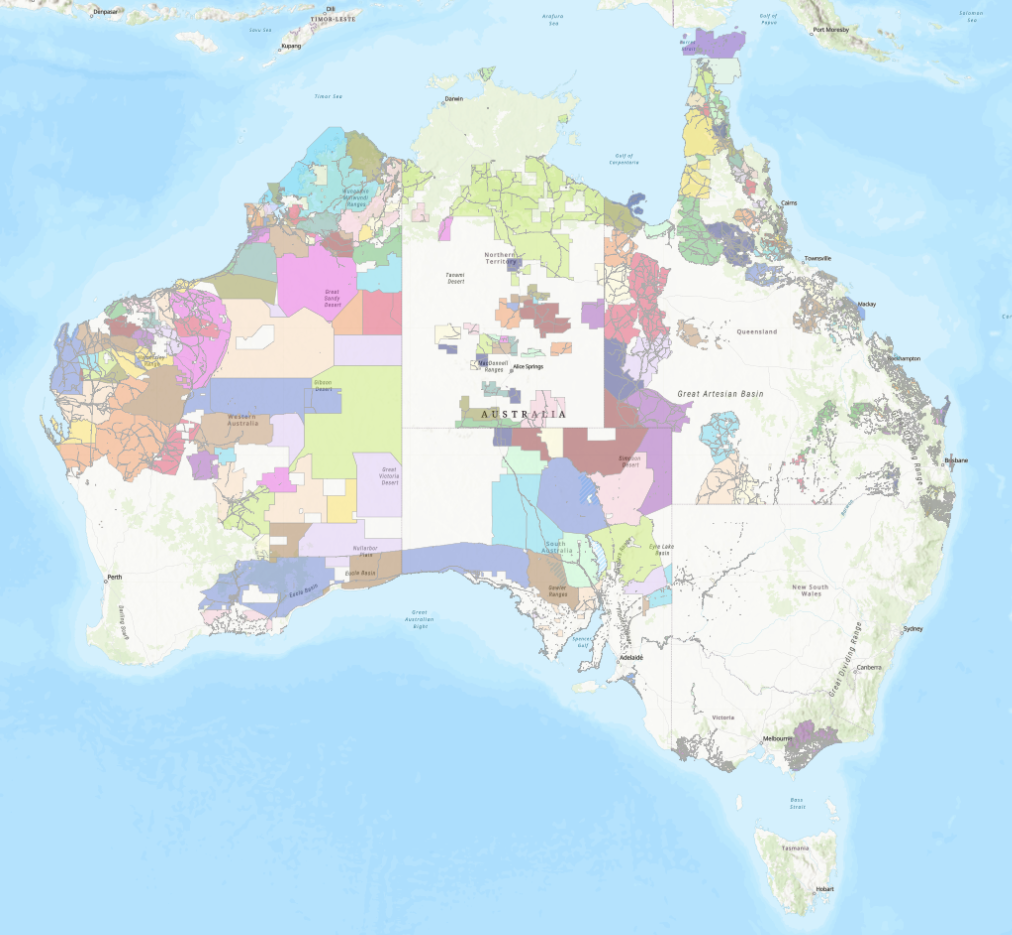
Native title applications and determinations, future act applications and determinations, and Indigenous Land Use Agreements (ILUAs) can be found at the National Native Title Tribunal. The Tribunal also operates Native Title Vision, a free visualisation, mapping and query tool exploring native title across Australia, including overlays of administrative regions, non-freehold land parcels and resources tenure.

In-person

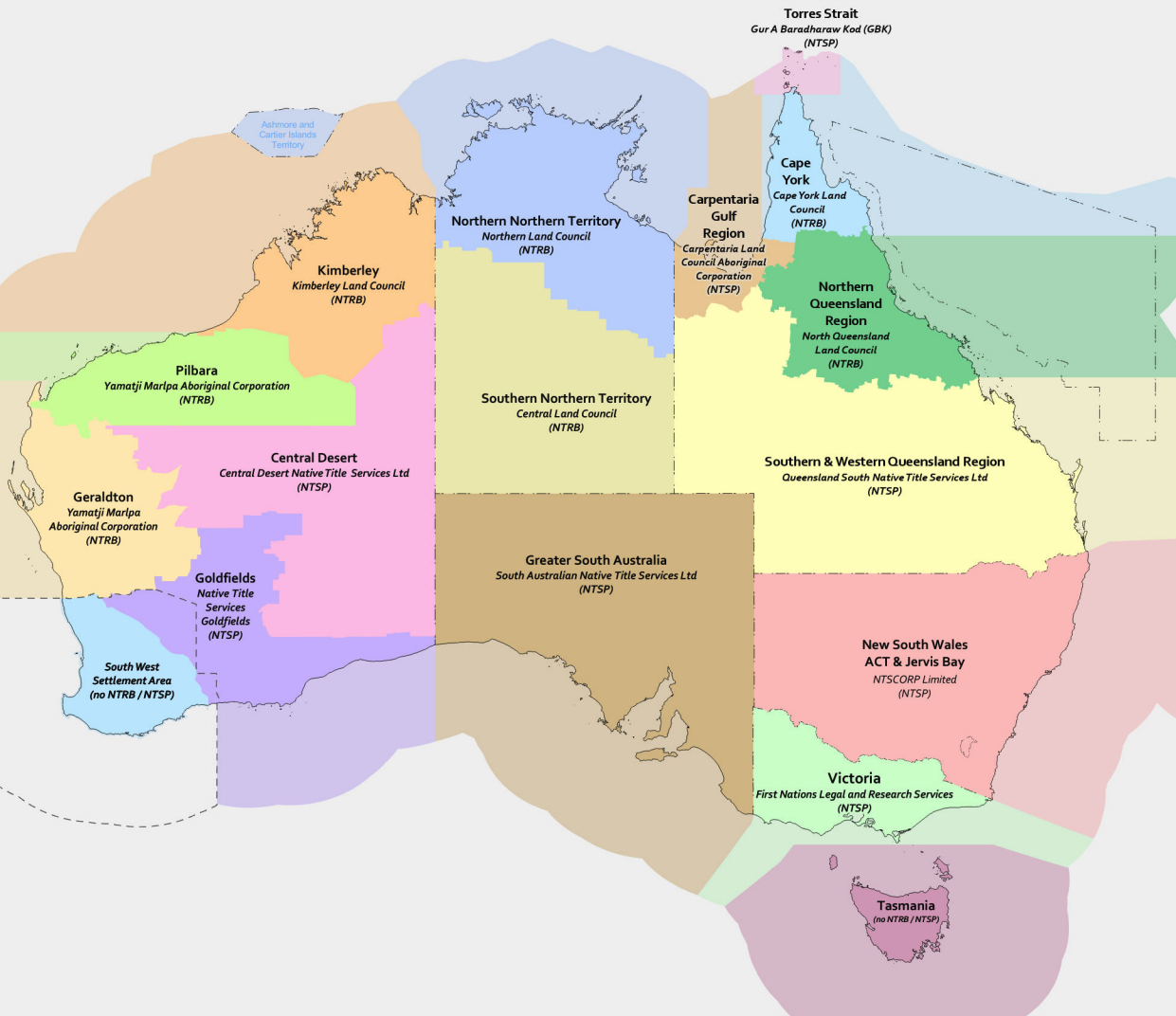
Proponents should approach the relevant Prescribed Body Corporate (PBC) or Native Title Representative Body / Service Provider, Aboriginal Land Council or Traditional Owner Corporation, to find out if the proposed project area has a Land Rights, Native Title claim or determination, or Indigenous Land Use Agreement (ILUA) over it. 

If in doubt, approach the relevant body in the area.

As of March 2025, the National Native Title Tribunal records: 

  • no native title claims registered in the ACT, nor determinations. 
  • no registered Indigenous Land Use Agreements. 

(See the NSW map)

The NSW Aboriginal Land Council can provide guidance to proponents about land dealings and properties recovered under the Aboriginal Land Rights Act 1983 (ALRA) and the Aboriginal Land Rights Regulation 2020 (ALRR). The Office of the Registrar of the Aboriginal Land Rights Act maintains the Register of Aboriginal Land Claims and the Register of Aboriginal Owners.

As of March 2025, the National Native Title Tribunal records: 

  • 8 native title claims registered in NSW, and 90 native title determinations of which 14 found native title exists in parts of the determination area and 6 found native title exists in the entire determination area.
  • 31 registered Indigenous Land Use Agreements. 

(See the NT map)

As of 2023, approximately 50% of the Northern Territory's land and 85% of the coastline is Aboriginal freehold land held under the Aboriginal Land Rights (Northern Territory) Act 1976 (Cth). The four land councils: Anindilyakwa, CentralNorthern and Tiwi can guide proponents regarding recognised legal title and control of lands in the NT. Aboriginal land is registered in the NT Government's Integrated Land Information System.

As of March 2025, the National Native Title Tribunal records: 

  • 24 native title claims registered for the Northern Territory, and 125 native title determinations of which 116 found native title exists in parts of the determination area and 7 found native title exists in the entire determination area.
  • 138 registered Indigenous Land Use Agreements 

(See the Qld map)

Land is granted under the Aboriginal Land Act 1991 and Torres Strait Islander Land Act 1991. PBCs or Registered Native Title Body Corporates (RNTBC) can be trustees of this land. The Indigenous land holding entity registers have records of entities that hold land transferred to First Nations. 

As of March 2025, the National Native Title Tribunal records: 

  • 38 native title claims registered in Queensland, and 237 native title determinations of which 38 found native title exists in parts of the determination area and 160 found native title exists in the entire determination area.
  • 916 registered Indigenous Land Use Agreements 

(See the SA map)

Aboriginal lands account for some 22% of the state (as of 2024) granted under three Acts: the Aboriginal Lands Trust Act 2013, the Anangu Pitjantjatjara Land Rights Act 1981, and the Maralinga Tjarutja Land Rights Act 1984. Recognised Aboriginal representative bodies Anangu Pitjantjatjara Yankunytjatjara, Kokatha Aboriginal Corporation and Maralinga Tjarutja can provide guidance to proponents. The Aboriginal Lands Trust holds titles of existing Aboriginal Reserves on behalf of First Nations people. 

As of March 2025, the National Native Title Tribunal records: 

  • 7 native title claims registered in South Australia, and 43 native title determinations of which 40 found native title exists in parts of the determination area and 1 found native title exists in the entire determination area.
  • 124 registered Indigenous Land Use Agreements 

The Aboriginal Land Council of Tasmania can guide proponents regarding land returned to First Nations. The Land Titles Office also has land-related information. 

As of March 2025, the National Native Title Tribunal records: 

  • no native title claims registered in Tasmania, nor determinations.
  • no registered Indigenous Land Use Agreements 

(See the Victoria map)

The Register of Land Use Activity Agreements assists proponents to understand land boundaries and meet their Land Use Activity Agreement (LUAA) obligations. 

As of March 2025, the National Native Title Tribunal records: 

  • 3 native title claims registered in Victoria, and 9 native title determinations of which 4 found native title exists in parts of the determination area and 2 found native title exists in the entire determination area.
  • 60 registered Indigenous Land Use Agreements 

(See the WA map)

The Aboriginal Lands Trust (ALT) established by the Aboriginal Affairs Planning Authority Act 1972 holds nearly 9% of the State's land (as of March 2025). LandGate has information about tenure including the ownership and vesting of freehold and Crown land. LandInfo WA has information about all matters pertaining to land.

As of March 2025, the National Native Title Tribunal records: 

  • 20 native title claims registered in Western Australia, and 145 native title determinations of which 90 found native title exists in parts of the determination area and 49 found native title exists in the entire determination area.
  • 236 registered Indigenous Land Use Agreements 


Navigate the system: Land Rights and native title bodies by jurisdiction

When a project is being considered, proponents must contact the representative bodies that administer land rights and native title in each jurisdiction on behalf of First Nations people.

  • Prescribed Body Corporates or a Registered Native Title Body Corporates
  • Native Title Representative Body or Service Providers
  • Aboriginal Land Councils 
  • Traditional Owner Corporations
    • Registered Aboriginal Parties
    • Noongar Regional Corporations

The first point of contact for proponents, government and other people wanting to conduct business with native title owners, or to do activities on native title land, are the more than 280 Prescribed Body Corporates (PBCs) across Australia. 

When a native title determination is made, the Native Title Act 1993 (Cth) requires claimants to nominate an existing corporation or establish a Prescribed Body Corporate to manage, protect, and represent native title owners rights and interests. 

Registered Native Title Body Corporates are often referred to as PBCs.

PBCs and Registered Native Title Body Corporates (RNTBCs) are legal entities that hold and manage native title rights for Traditional Owners. 

PBCs represent native holders on issues, including land and water management, tenure issues, biodiversity and environmental protection, cultural heritage, land use planning, and economic development activities.

PBCs are being approached on multiple fronts by project proponents, with many unable to deal strategically and effectively with the opportunities and risks of potential projects because of a lack of resourcing.

Most PBCs are significantly under-resourced, relying on government basic support funding of $50,000 - $80,000 per annum used for basic administration to help meet corporate and operational obligations. 

Companies and governments must invest in PBCs capacity prior to any negotiation to ensure a level playing field. Putting money on the table up front can secure engagement – both in terms of PBC fees and regulations and for enabling the process.

If there is no PBC (or you are unable to find one) then you should commence engagement with the Native Title Representative Bodies-Service Providers.

Native Title Representative Bodies and Native Title Service Providers have statutory functions under the Native Title Act 1993 (Cth) and can identify the native title claimants and holders in a particular area. 

They can also assist in negotiating land and sea use agreements.

If there is no Prescribed Body Corporate (PBC) then you should commence engagement with the Native Title Representative Bodies-Service Providers.

Their role is to assist native title claimants and holders with:

  • native title applications, negotiations and proceedings 
  • responding to non-claimant applications and future act negotiations
  • compensation and test cases
  • heritage and site clearing tasks
  • servicing of Prescribed Bodies Corporates (PBCs), including assistance in relation to future acts and ILUAs (and other agreements in relation to native title).

Native Title Service Providers perform the same function under the Native Title Act 1993 (Cth) as Native Title Representative Bodies in areas where there is no Native Title Representative Body.

Native Title Representative Bodies-Service Providers are funded by the Australian government under the Native Title Act 1993

Aboriginal Land Councils are typically established under the relevant state or territory land rights legislation. 

In some jurisdictions, land rights legislation also establishes entities called 'land trusts', which hold title to areas of land. 

The legislation that established the relevant Land Council will typically set out their purpose and functions. Accordingly, the purpose and functions of Land Councils will differ between jurisdictions. 

The functions of Land Councils will likely include assisting First Nations groups to negotiate agreements with proponents and governments over the use of land and waters.

Traditional Owner Corporations

In Victoria, groups may become formally recognised through a Recognition and Settlement Agreement under Victoria's Traditional Owner Settlement Act 2010. If this occurs, then their corporation is typically referred to as a "Traditional Owner Corporation" (TOC). 

The same groups may also have achieved a native title determination under the Native Title Act 1993, meaning the TOC will also be a Prescribed Body Corporate (PBC). The same corporation is also likely to be a Registered Aboriginal Party (RAP) under Victoria's Aboriginal Heritage Act 2006, appointed by the Victorian Heritage Council. 

Registered Aboriginal Parties 

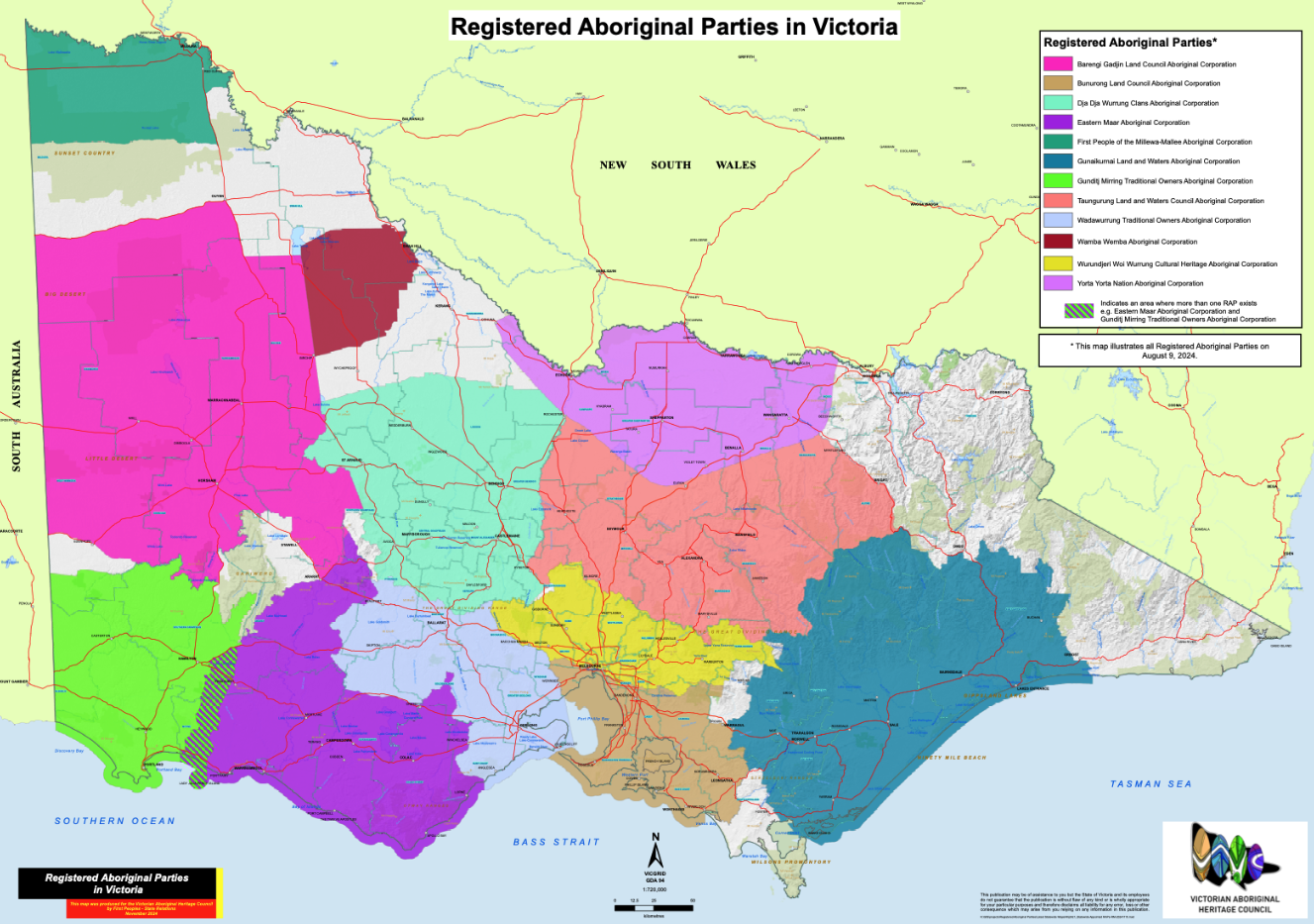
All formally recognised Traditional Owners in Victoria are represented by Registered Aboriginal Parties (RAPs), also known as Traditional Owner Corporations.

The Victorian Aboriginal Heritage Act 2006 recognises RAPs as the primary guardians, keepers and knowledge holders of Aboriginal cultural heritage.

Proponents must contact RAPs for advice on all matters relating to places or objects in a proposed project area, and to negotiate a Cultural Heritage Management Plan.

The core functions of RAPs includes:

  • evaluating Cultural Heritage Management Plans
  • assessing Cultural Heritage Permit applications
  • making decisions about Cultural Heritage Agreements
  • providing advice on applications for interim or ongoing Protection Declarations
  • entering into Aboriginal Cultural Heritage Land Management Agreements with public land managers.

There are 12 RAPs (as of March 2025) covering approximately 77.5% of Victoria.

Traditional Owner groups in south west Western Australia are represented by six Noongar Regional Corporations.

The Regional Corporations manage and care for the cultural land and waters within the region and have prescribed responsibilities under their Indigenous Land Use Agreements (ILUAs) to advance Noongar-led social, economic, cultural and environmental outcomes.

Proponents must engage with the Regional Corporations in accordance with these requirements. 

These include formalised partnership arrangements in relation to:

The Regional Corporation Guide highlights the obligations and provides a summary of the relevant sections in the ILUAs, Noongar Boodja Trust Deed and the Noongar Corporation Rule Books.

The Regional Corporations were established as part of the South West Native Title Settlement – a landmark native title agreement negotiated between the Noongar people and the Western Australian Government.

Connect with the right entity

Proponents must identify and approach the First Nations group with which to engage.

Where the proposed project area has a Land Rights, Native Title claim or determination, or Indigenous Land Use Agreement (ILUA) over it, proponents must approach the relevant Prescribed Body Corporate (PBC) or Native Title Representative Body / Service Provider. 

In Tasmania, approach the Aboriginal Land Council of Tasmania or Tasmanian Aboriginal Centre. And in Jervis Bay Territory, approach the Wreck Bay Aboriginal Community Council.

If in doubt, approach the relevant Prescribed Body Corporate (PBC) or Native Title Representative Body / Service Provider in the area.

Click on the States and Territories below to find the entities you need to talk to that administer land rights / native title in each jurisdiction. 

Native title representative bodies and service providers

Prescribed Body Corporates and/or Registered Native Title Body Corporates

  • None 

Aboriginal Land Councils 

  • None

Native title representative bodies and service providers

Prescribed Body Corporates and/or Registered Native Title Body Corporates

Aboriginal Land Councils, with functions for administering statutory land rights schemes 

Native title representative bodies and service providers

Prescribed Body Corporates and/or Registered Native Title Body Corporates

Aboriginal Land Councils, with functions for administering statutory land rights schemes

Native title representative bodies and service providers

Prescribed Body Corporates and/or Registered Native Title Body Corporates

Aboriginal Land Councils, with functions for administering statutory land rights schemes

Tasmania Aboriginal Centre is the first point of contact. The Commonwealth does this for future act notices.

Native title representative bodies and service providers

  • None

Prescribed Body Corporates and/or Registered Native Title Body Corporates

  • None

Aboriginal Land Councils, with functions for administering statutory land rights schemes

Native title representative bodies and service providers

Prescribed Body Corporates and/or Registered Native Title Body Corporates

Noongar Regional Corporations (Traditional Owner Corporations)

Aboriginal Land Councils, with functions for administering statutory land rights schemes

Learn from the past: Real-world examples of agreements and settlements

Agreements, Treaties and Negotiated Settlements Database - overseen by the University of Melbourne, includes links to browse legislation, case law and agreements, including:

National Native Title Tribunal - established as an independent body under the Native Title Act 1993 (Cth), the Tribunal contains information about all native title applications and determinations, Indigenous Land Use Agreements (ILUAs), section 31 agreements, and future act applications and determinations.

The Tribunal also produces national and jurisdiction-wide native title themed maps showing native title applications, determinations, ILUA’s, and so on.


When communities lead: Co-designed success stories in clean energy

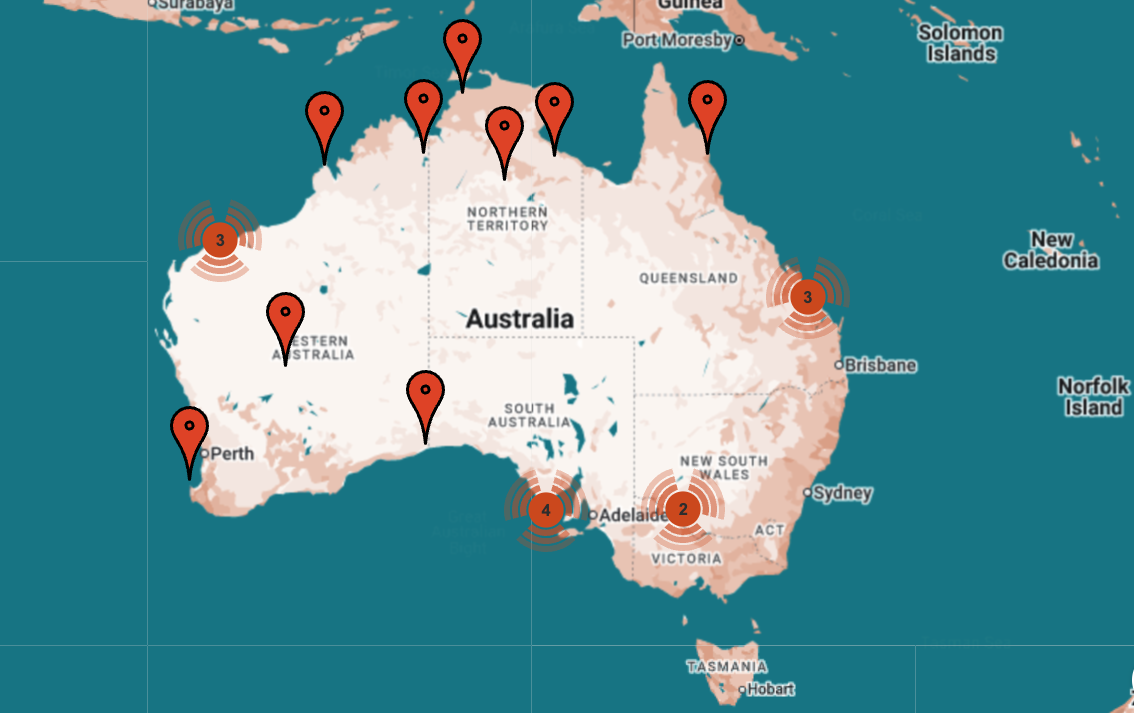
We're tracking First Nations involvement, ownership and equity in clean energy projects in Australia through negotiated participation agreements. 

Our First Nations project tracker demonstrates the transformative potential of a First Nations-led clean energy transition.

In addition to exploring the projects on our tracker, we provide below four co-design examples from both Australia and Canada. 
 

Yindjibarndi Aboriginal Corporation and ACEN Australia

  • Yindjibarndi equity participation of 25% to 50% in all projects
  • Preferred contracting for Yindjibarndi-owned businesses & training and employment opportunities for Yindjibarndi people
  • Yindjibarndi site approval
  • Fast-tracking of approvals

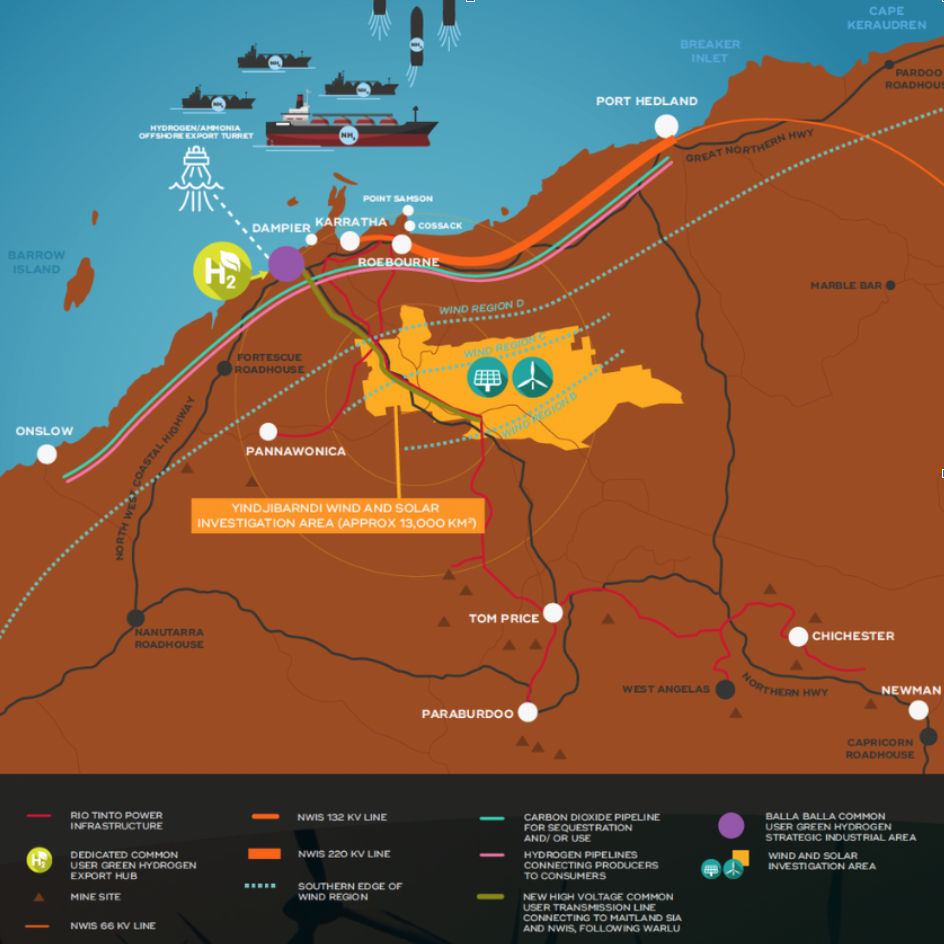
Yindjibarndi Aboriginal Corporation (YAC) and renewables developer ACEN Australia have an agreement that provides the Yindjibarndi people equity participation of 25 to 50% in all projects, ensures Yindjibarndi approval rights for site selection, gives preferred contracting for Yindjibarndi-owned businesses, and also training and employment opportunities for Yindjibarndi people.

YAC initiated the structure, setting up in 2023 a business that's 100% owned by the Yindjibarndi people, Yiyangu Pty Ltd which with ACEN Renewables developed a partnership agreement and created Yindjibarndi Energy Corporation. Yiyangu owns 25% of Yindjibarndi Energy Corporation with the balance controlled by ACEN.

In April 2024, an Indigenous Land Use Agreement (ILUA) was registered to advance renewable energy generation and storage on Yindjibarndi ngurra (country). Parties to the ILUA are Yindjibarndi Aboriginal Corporation (YAC), Yindjibarndi Ngurra Aboriginal Corporation (YNAC), ACEN Corporation, and Yiyangu. The ILUA provides the necessary native title consents for the development of large-scale renewable energy projects on Yindjibarndi country.

Yindjibarndi Energy Corporation plans to develop, own and operate three large-scale renewable energy projects of up to 3 gigawatts (GW) in capacity in Western Australia’s Pilbara region. 

In 2024, the WA Government awarded YEC Project Priority status for the Chichester Range Transmission Corridor ensuring that YEC, ‘as the successful proponent will receive the necessary support and resources for timely development’. Then in March 2025, two of YEC’s renewable energy projects were selected for the National Renewable Energy Priority List, ‘unlocking access to enhanced regulatory support and streamlined processes’.


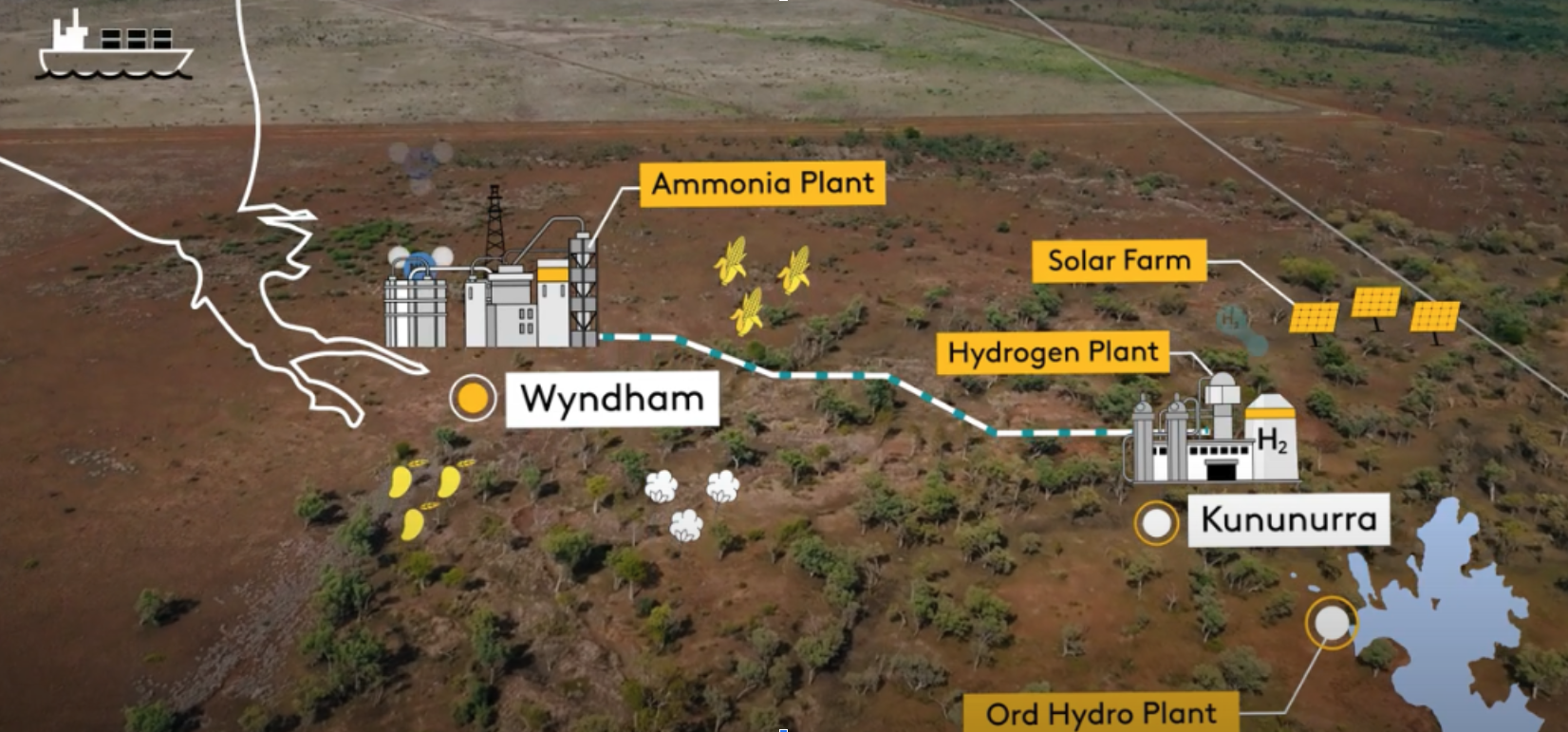
East Kimberly Clean Energy Project, Australia

  • Co-ownership model with First Nations equity shares divided equally
  • First Nations voice in key project decisions
  • Model significantly de-risks and accelerates project delivery
  • Government feasibility funding secured following project announcement

The East Kimberly Clean Energy Project positions First Nations as shareholders, not stakeholders. 

The Western Australia Project has a unique benefit sharing scheme involving co-ownership through a partnership between investment firm Pollination and 3 local First Nations groups including MG Corporation representing the Miriuwung and Gajerrong people, Balanggarra Ventures Corporation, and the Kimberley Land Council.

Each of the four partners will own one-quarter of the project, providing meaningful financial benefits to First Nations groups whilst ensuring First Nations have a voice in key project decisions. 

Co-owners say the partnership significantly de-risks and accelerates project delivery as heritage, native title, environmental, engineering and approvals are integrated in project development activities, providing a model for infrastructure projects that ensures First Nations benefit from the scale and pace of the energy transition.

Announced in July 2023, the Project garnered $1.6 million towards a feasibility study from the Australian Renewable Energy Agency (ARENA) in March 2024.


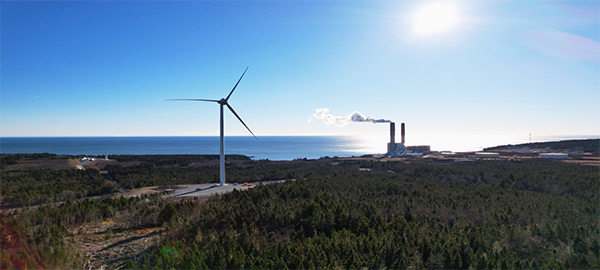
Wocawson Energy Project, Canada

  • Equal equity partnership model with First Nations 
  • Strong relationship between the partners
  • Development shaped by First Nations
  • First Nations have a seat at the table
  • Revenue back into the community 

The Wocawson Energy Project located in New Brunswick, Canada was proposed by the Wocawson Energy Limited Partnership, a partnership formed between the Tobique First Nation group and private independent power producer Natural Forces, with the project majority owned by Tobique First Nation.

Tobique First Nation and Natural Forces signed a 30-year Power Purchase Agreement (PPA) with NB Power Inc in 2018. The PPA allowed for the sale of renewable energy generated from the wind energy project. The Government of New Brunswick’s ‘Locally Owned Renewable Energy Projects that are Small Scale’ renewable energy procurement program allowed NB Power to obtain up to 40 megawatts (MW) of renewable energy from First Nations and an additional 40MW of renewable energy from local entities.

Tobique First Nation and Natural Forces developed, constructed, and now own and operate the Wocawson Energy Project, 5 wind turbines with an installed capacity of 20 megawatts (MW) which became operational in December 2020.

In its case study on collaborative partnerships, Natural Forces states it ‘operates exclusively under an equity partnership model. This model ensures that all owners in the project receive the same share structure and the same profit. Every partner has a voice at the table, and all project decisions are made together.’
 

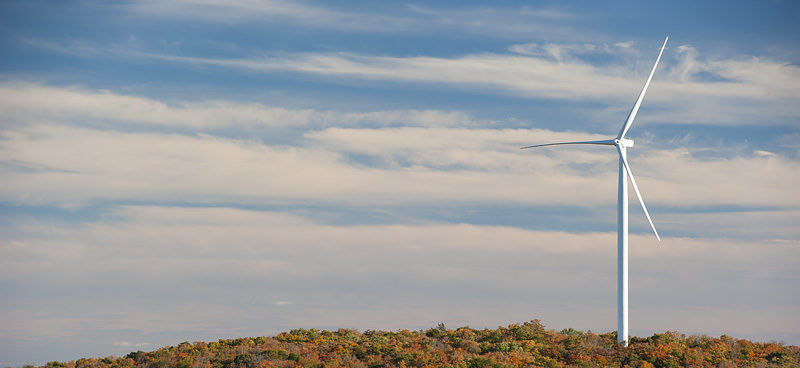
Bow Lake Wind Farm, Canada

  • Free Prior and Informed Consent in practice
  • Co-development, ownership and operation partnership formed DURING project development 
  • First Nation employment
  • Revenue returned to the community

During project development of the 58MW Bow Lake Wind Farm in Ontario, the Batchewana First Nation of Ojibways expressed interest in participating as a partner.

The Nodin Kitagan Limited Partnership – a 50/50 commercial partnership between the Batchewana First Nation of Ojibways and developer BluEarth Renewables – was formed in 2012 to develop, own and operate the Bow Lake Wind Farm, which was then commissioned in 2015.

Batchewana First Nation’s ‘Letter of Assertions’, outlining their expected relationship with developers, was the foundation for the relationship with partner BluEarth Renewables.

Batchewana First Nation brought their own financial resources to the partnership (via favourable Canadian government programs) and improved the project by contributing cultural and ecological knowledge.

The Bow Lake Wind Farm established a Community Liaison Committee to facilitate two-way communication between the project team and stakeholders. 

During some points in construction, 50% of employees were Batchewana First Nation. 

The facility operates under a 20-year power purchase agreement with the Independent Electricity System Operator. 

In September 2024, Batchewana First Nation acquired 100% ownership of the facility with BluEarth Renewables remaining as operators. To facilitate the transaction, Batchewana First Nation secured financing through the First Nations Finance Authority.
This Toolkit is subject to change and improvement as more information becomes available. To report content updates or broken links, please click here.