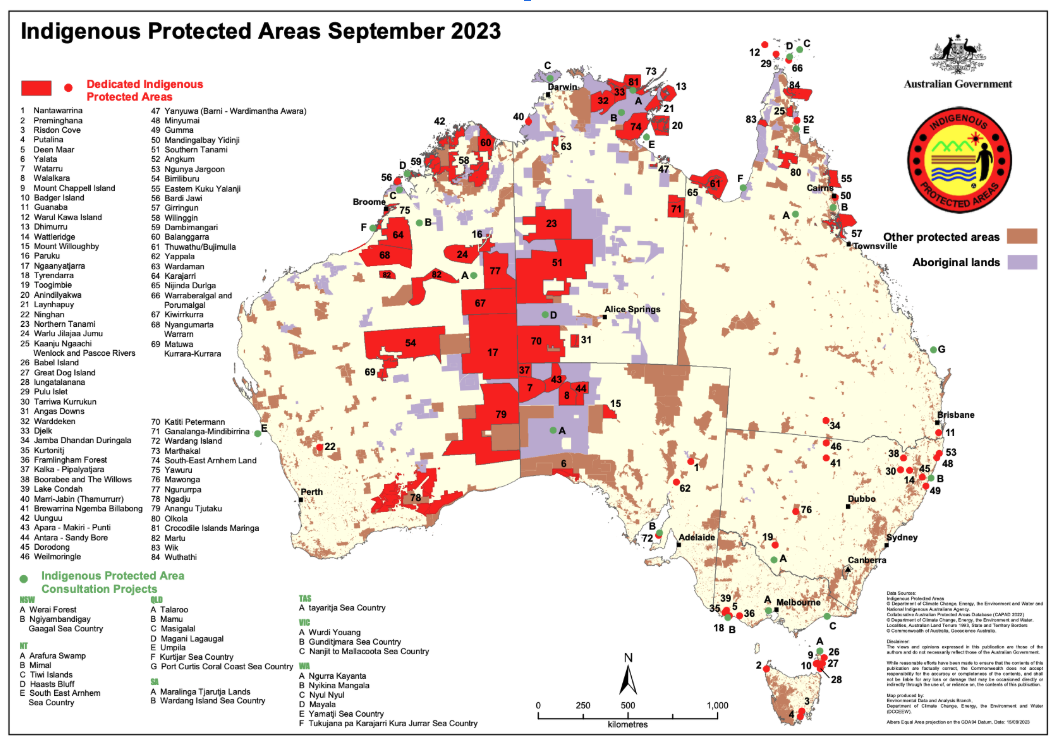
Indigenous Protected Areas (IPAs) are areas of land or sea that Traditional Owners have agreed to manage and protect in line with Traditional Owner objectives.
IPAs are intended to support First Nations people’s right to self-determination under the United Nations Declaration on the Rights of Indigenous People by voluntarily managing land as protected areas.
When Traditional Owners enter into an IPA agreement with the Australian Government, the parties negotiate and agree to an environmental and cultural plan specific to that area.
Tools and mechanisms by which Traditional Owners manage IPAs include:
- management planning processes (including Healthy Country Planning, based on Indigenous cultural values and governance)
- establishing Indigenous land and sea management ranger groups
- partnering with government agencies, non government organisations, neighbouring ranger groups, landowners, philanthropists and natural resource stakeholders.
There are close to 100 IPAs in Australia.
Visit this interactive map showing the location of Indigenous Protected Areas, their administering bodies, and First Nations ranger groups in Australia.