The Best Practice Principles for Clean Energy Projects, developed by the First Nations Clean Energy Network, offer a bold, actionable framework for governments, industry, and investors who want to lead—not lag—on equity, sustainability, and project certainty.
These ten principles are a strategic roadmap. They guide proponents to engage respectfully, secure Free, Prior and Informed Consent (FPIC), protect cultural heritage, embed land stewardship, and ensure economic and social benefits flow to First Nations communities. They reflect global human rights standards, including the UN Declaration on the Rights of Indigenous Peoples, and elevate what responsible development looks like in the clean energy era.
Proponents wanting to be recognised as industry leaders and setting the benchmark for responsible development must commit to undertaking their projects in line with the Best Practice Principles — from the earliest stages of planning through to decommissioning.
Regardless of the minimum legal requirements, proponents must adopt these principles early to gain trust, de-risk approvals, attract premium investment, and unlock faster project timelines. And investors demanding them will help ensure long-term viability and social licence.
These principles are the foundation for doing business with First Nations on Country—and doing it well.
Find these guides and more in our Toolkit to assist your clean energy journey.
The principles
- Engage respectfully
- Prioritise clear, accessible and accurate information
- Ensure cultural heritage is preserved and protected
- Protect country and environment
- Be a good neighbour
- Ensure economic benefits are shared
- Provide social benefits for community
- Embed land stewardship
- Ensure cultural competency
- Implement, monitor and report back
Leading Practice Principles: First Nations and Renewable Energy Projects
The Clean Energy Council and KPMG worked with the First Nations Clean Energy Network to operationalise the Network’s ‘Best Practice Principles’.
The subsequent Leading Practice Principles sets expectations for meaningful engagement and partnering with First Nations, detailing key considerations for engagement at each stage of a project’s life cycle including how to exercise meaningful engagement, consent, participation and benefit-sharing with First Nations people.
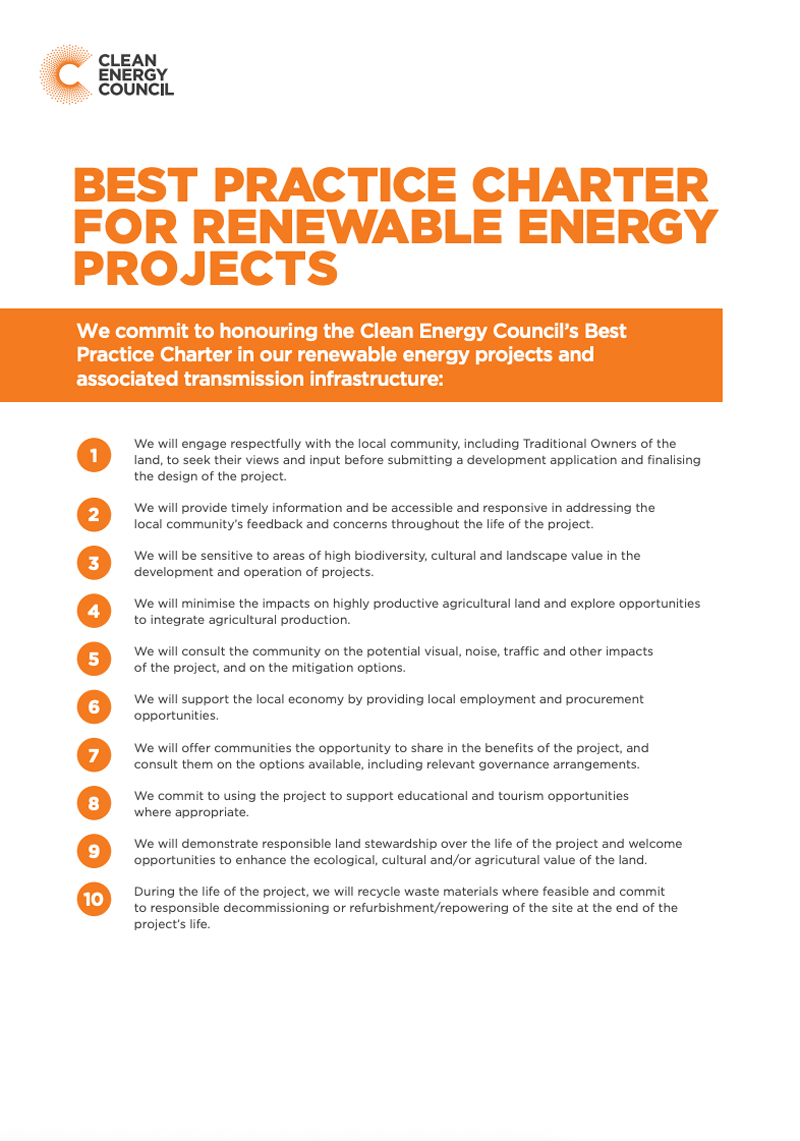
The Best Practice Charter for Renewable Energy Projects
The First Nations Clean Energy Network’s Best Practice Principles have also have made their way into industry practice and reporting frameworks.
The Clean Energy Council’s Best Practice Charter for Renewable Energy Projects is a voluntary set of commitments for the clean energy industry. It outlines the standards that signatories need to uphold in the development of current and new clean energy projects. That includes engaging respectfully with the communities in which proponents plan and operate projects, including with the Traditional Owners, to seek their views and input before submitting a development application and finalising the design of the project.
It further includes offering communities the opportunity to share in the benefits of the project, consulting them on the options available including relevant governance arrangements, and providing local employment and procurement opportunities, to make a positive contribution to the regions in which they operate.