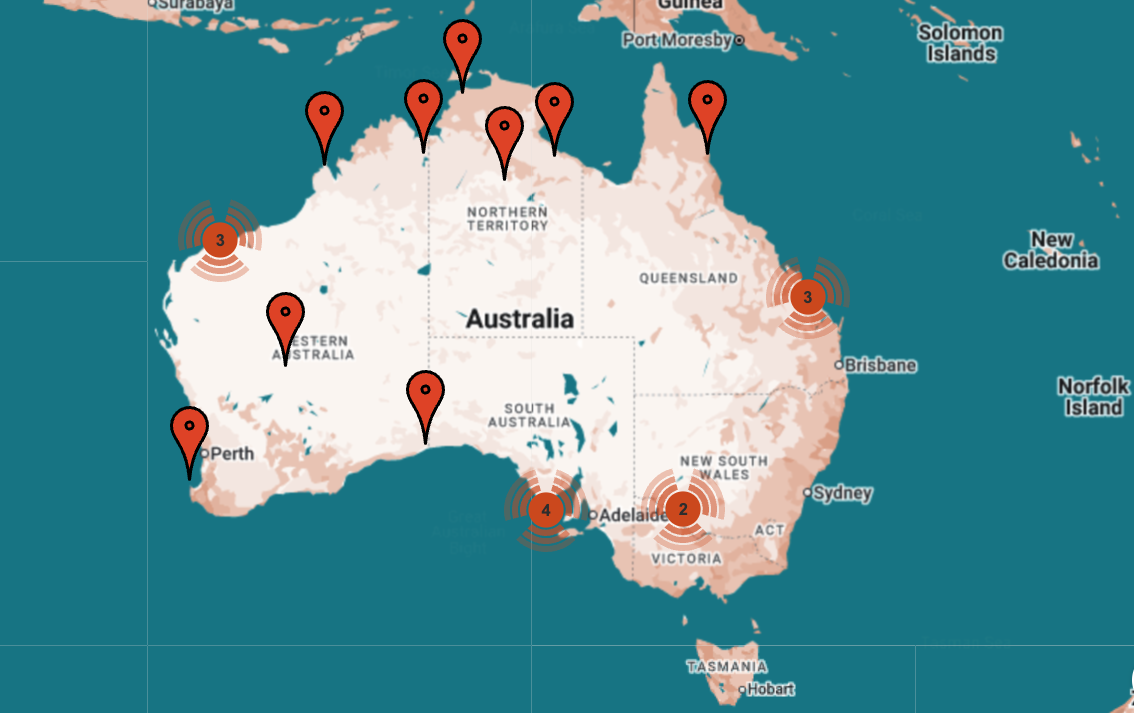
We're tracking First Nations involvement, ownership and equity in clean energy projects in Australia through negotiated participation agreements.
Our First Nations project tracker demonstrates the transformative potential of a First Nations-led clean energy transition.
In addition to exploring the projects on our tracker, we provide below four co-design examples from both Australia and Canada.
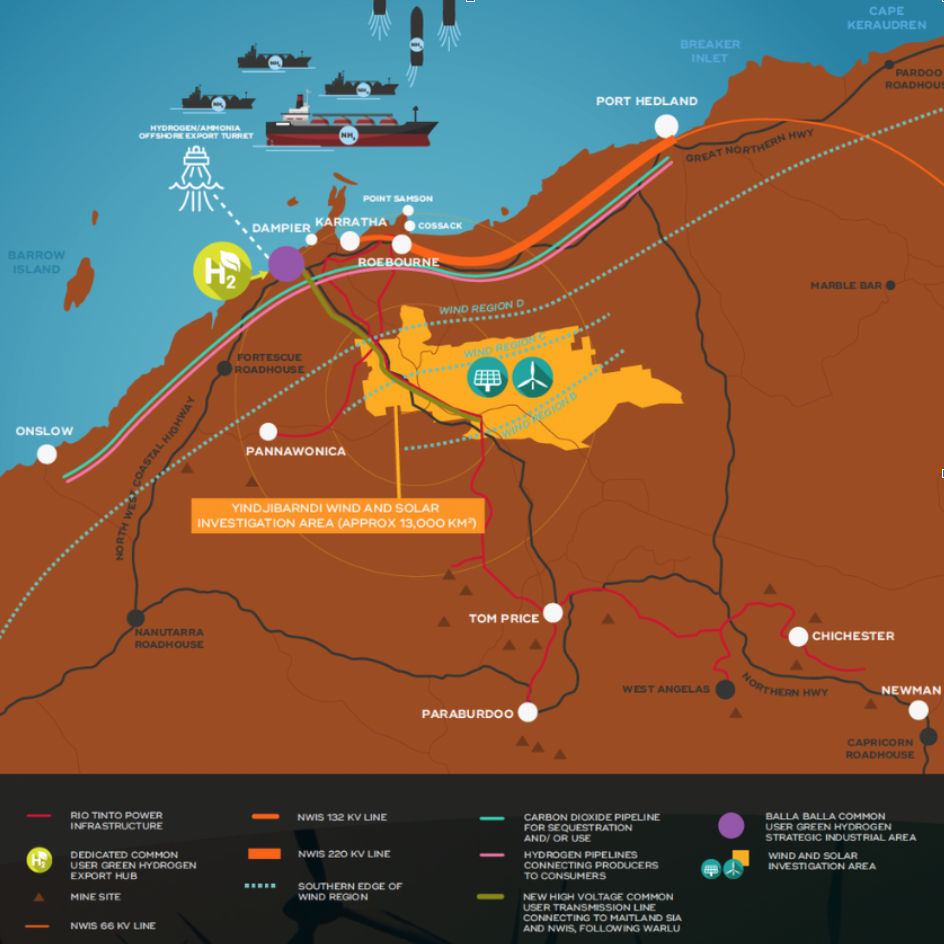
Yindjibarndi Aboriginal Corporation and ACEN Australia
- Yindjibarndi equity participation of 25% to 50% in all projects
- Preferred contracting for Yindjibarndi-owned businesses & training and employment opportunities for Yindjibarndi people
- Yindjibarndi site approval
- Fast-tracking of approvals
Yindjibarndi Aboriginal Corporation (YAC) and renewables developer ACEN Australia have an agreement that provides the Yindjibarndi people equity participation of 25 to 50% in all projects, ensures Yindjibarndi approval rights for site selection, gives preferred contracting for Yindjibarndi-owned businesses, and also training and employment opportunities for Yindjibarndi people.
YAC initiated the structure, setting up in 2023 a business that's 100% owned by the Yindjibarndi people, Yiyangu Pty Ltd which with ACEN Renewables developed a partnership agreement and created Yindjibarndi Energy Corporation. Yiyangu owns 25% of Yindjibarndi Energy Corporation with the balance controlled by ACEN.
In April 2024, an Indigenous Land Use Agreement (ILUA) was registered to advance renewable energy generation and storage on Yindjibarndi ngurra (country). Parties to the ILUA are Yindjibarndi Aboriginal Corporation (YAC), Yindjibarndi Ngurra Aboriginal Corporation (YNAC), ACEN Corporation, and Yiyangu. The ILUA provides the necessary native title consents for the development of large-scale renewable energy projects on Yindjibarndi country.
Yindjibarndi Energy Corporation plans to develop, own and operate three large-scale renewable energy projects of up to 3 gigawatts (GW) in capacity in Western Australia’s Pilbara region.
In 2024, the WA Government awarded YEC Project Priority status for the Chichester Range Transmission Corridor ensuring that YEC, ‘as the successful proponent will receive the necessary support and resources for timely development’. Then in March 2025, two of YEC’s renewable energy projects were selected for the National Renewable Energy Priority List, ‘unlocking access to enhanced regulatory support and streamlined processes’.
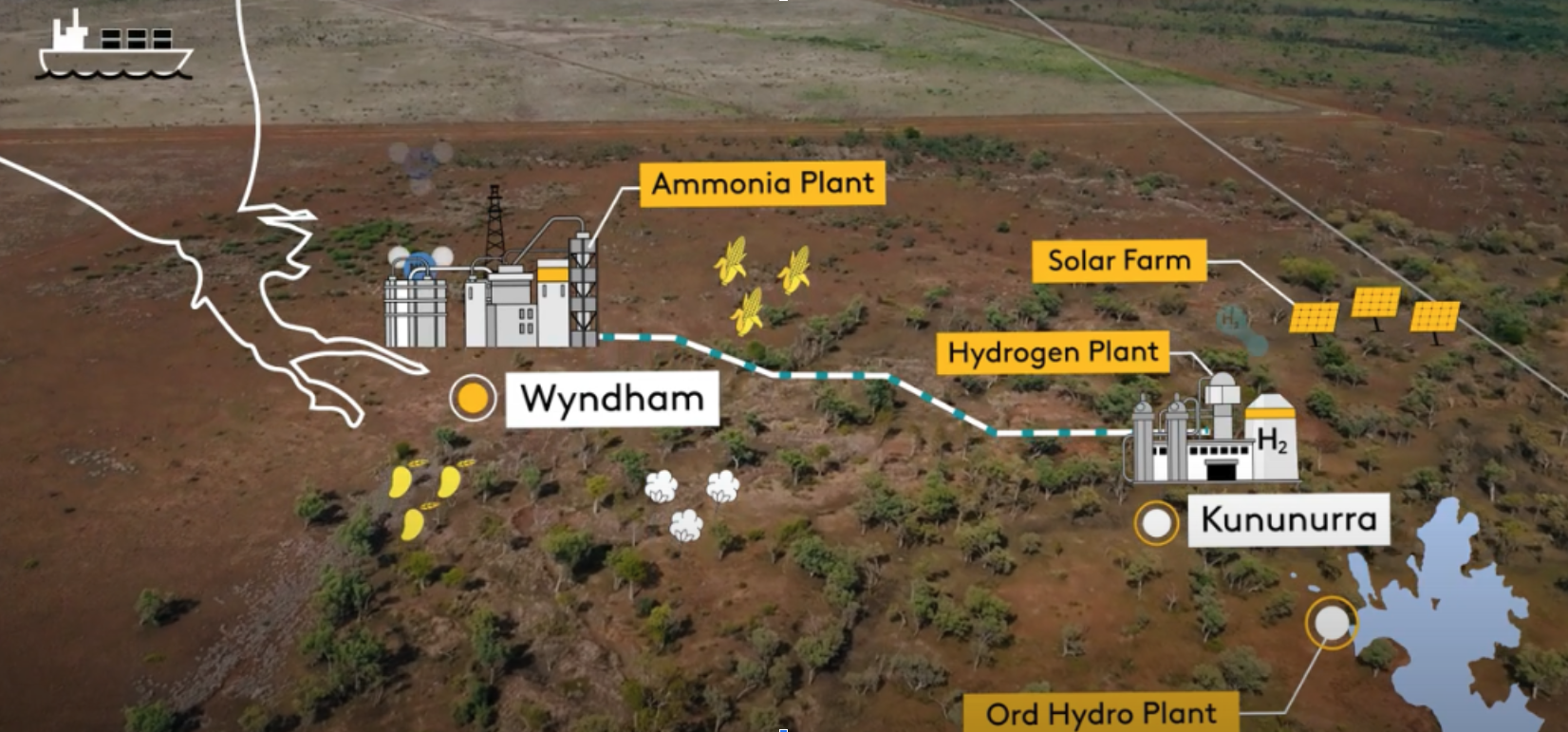
East Kimberly Clean Energy Project, Australia
- Co-ownership model with First Nations equity shares divided equally
- First Nations voice in key project decisions
- Model significantly de-risks and accelerates project delivery
- Government feasibility funding secured following project announcement
The East Kimberly Clean Energy Project positions First Nations as shareholders, not stakeholders.
The Western Australia Project has a unique benefit sharing scheme involving co-ownership through a partnership between investment firm Pollination and 3 local First Nations groups including MG Corporation representing the Miriuwung and Gajerrong people, Balanggarra Ventures Corporation, and the Kimberley Land Council.
Each of the four partners will own one-quarter of the project, providing meaningful financial benefits to First Nations groups whilst ensuring First Nations have a voice in key project decisions.
Co-owners say the partnership significantly de-risks and accelerates project delivery as heritage, native title, environmental, engineering and approvals are integrated in project development activities, providing a model for infrastructure projects that ensures First Nations benefit from the scale and pace of the energy transition.
Announced in July 2023, the Project garnered $1.6 million towards a feasibility study from the Australian Renewable Energy Agency (ARENA) in March 2024.
Wocawson Energy Project, Canada
- Equal equity partnership model with First Nations
- Strong relationship between the partners
- Development shaped by First Nations
- First Nations have a seat at the table
- Revenue back into the community
The Wocawson Energy Project located in New Brunswick, Canada was proposed by the Wocawson Energy Limited Partnership, a partnership formed between the Tobique First Nation group and private independent power producer Natural Forces, with the project majority owned by Tobique First Nation.
Tobique First Nation and Natural Forces signed a 30-year Power Purchase Agreement (PPA) with NB Power Inc in 2018. The PPA allowed for the sale of renewable energy generated from the wind energy project. The Government of New Brunswick’s ‘Locally Owned Renewable Energy Projects that are Small Scale’ renewable energy procurement program allowed NB Power to obtain up to 40 megawatts (MW) of renewable energy from First Nations and an additional 40MW of renewable energy from local entities.
Tobique First Nation and Natural Forces developed, constructed, and now own and operate the Wocawson Energy Project, 5 wind turbines with an installed capacity of 20 megawatts (MW) which became operational in December 2020.
In its case study on collaborative partnerships, Natural Forces states it ‘operates exclusively under an equity partnership model. This model ensures that all owners in the project receive the same share structure and the same profit. Every partner has a voice at the table, and all project decisions are made together.’
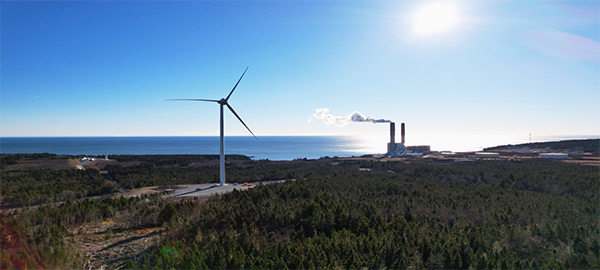
Bow Lake Wind Farm, Canada
- Free Prior and Informed Consent in practice
- Co-development, ownership and operation partnership formed DURING project development
- First Nation employment
- Revenue returned to the community
During project development of the 58MW Bow Lake Wind Farm in Ontario, the Batchewana First Nation of Ojibways expressed interest in participating as a partner.
The Nodin Kitagan Limited Partnership – a 50/50 commercial partnership between the Batchewana First Nation of Ojibways and developer BluEarth Renewables – was formed in 2012 to develop, own and operate the Bow Lake Wind Farm, which was then commissioned in 2015.
Batchewana First Nation’s ‘Letter of Assertions’, outlining their expected relationship with developers, was the foundation for the relationship with partner BluEarth Renewables.
Batchewana First Nation brought their own financial resources to the partnership (via favourable Canadian government programs) and improved the project by contributing cultural and ecological knowledge.
The Bow Lake Wind Farm established a Community Liaison Committee to facilitate two-way communication between the project team and stakeholders.
During some points in construction, 50% of employees were Batchewana First Nation.
The facility operates under a 20-year power purchase agreement with the Independent Electricity System Operator.
In September 2024, Batchewana First Nation acquired 100% ownership of the facility with BluEarth Renewables remaining as operators. To facilitate the transaction, Batchewana First Nation secured financing through the First Nations Finance Authority.