Navigate the system: Land Rights and native title bodies by jurisdiction
When a project is being considered, proponents must contact the representative bodies that administer land rights and native title in each jurisdiction on behalf of First Nations people.
- Prescribed Body Corporates or a Registered Native Title Body Corporates
- Native Title Representative Body or Service Providers
- Aboriginal Land Councils
-
Traditional Owner Corporations
- Registered Aboriginal Parties
- Noongar Regional Corporations
Prescribed Body Corporates or Registered Native Title Body Corporates
The first point of contact for proponents, government and other people wanting to conduct business with native title owners, or to do activities on native title land, are the more than 280 Prescribed Body Corporates (PBCs) across Australia.
When a native title determination is made, the Native Title Act 1993 (Cth) requires claimants to nominate an existing corporation or establish a Prescribed Body Corporate to manage, protect, and represent native title owners rights and interests.
Registered Native Title Body Corporates are often referred to as PBCs.
PBCs and Registered Native Title Body Corporates (RNTBCs) are legal entities that hold and manage native title rights for Traditional Owners.
PBCs represent native holders on issues, including land and water management, tenure issues, biodiversity and environmental protection, cultural heritage, land use planning, and economic development activities.
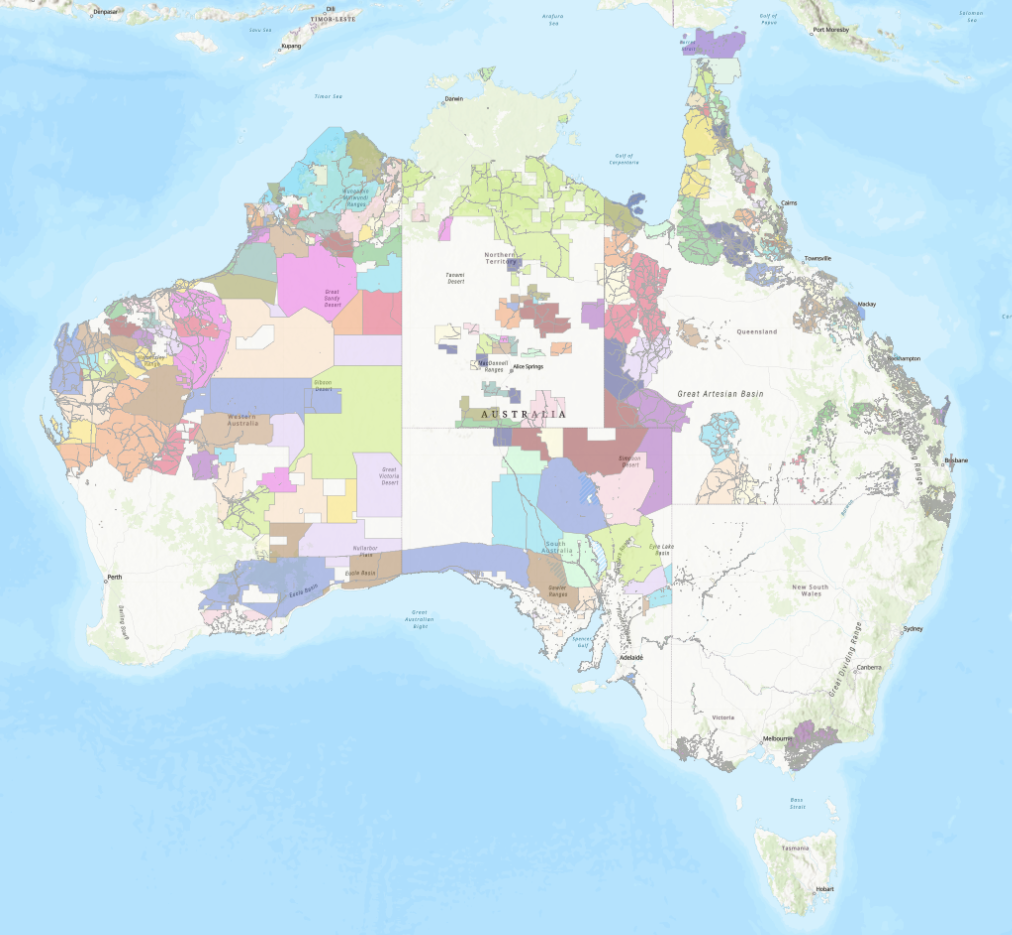
PBCs are being approached on multiple fronts by project proponents, with many unable to deal strategically and effectively with the opportunities and risks of potential projects because of a lack of resourcing.
Most PBCs are significantly under-resourced, relying on government basic support funding of $50,000 - $80,000 per annum used for basic administration to help meet corporate and operational obligations.
Companies and governments must invest in PBCs capacity prior to any negotiation to ensure a level playing field. Putting money on the table up front can secure engagement – both in terms of PBC fees and regulations and for enabling the process.
If there is no PBC (or you are unable to find one) then you should commence engagement with the Native Title Representative Bodies-Service Providers.
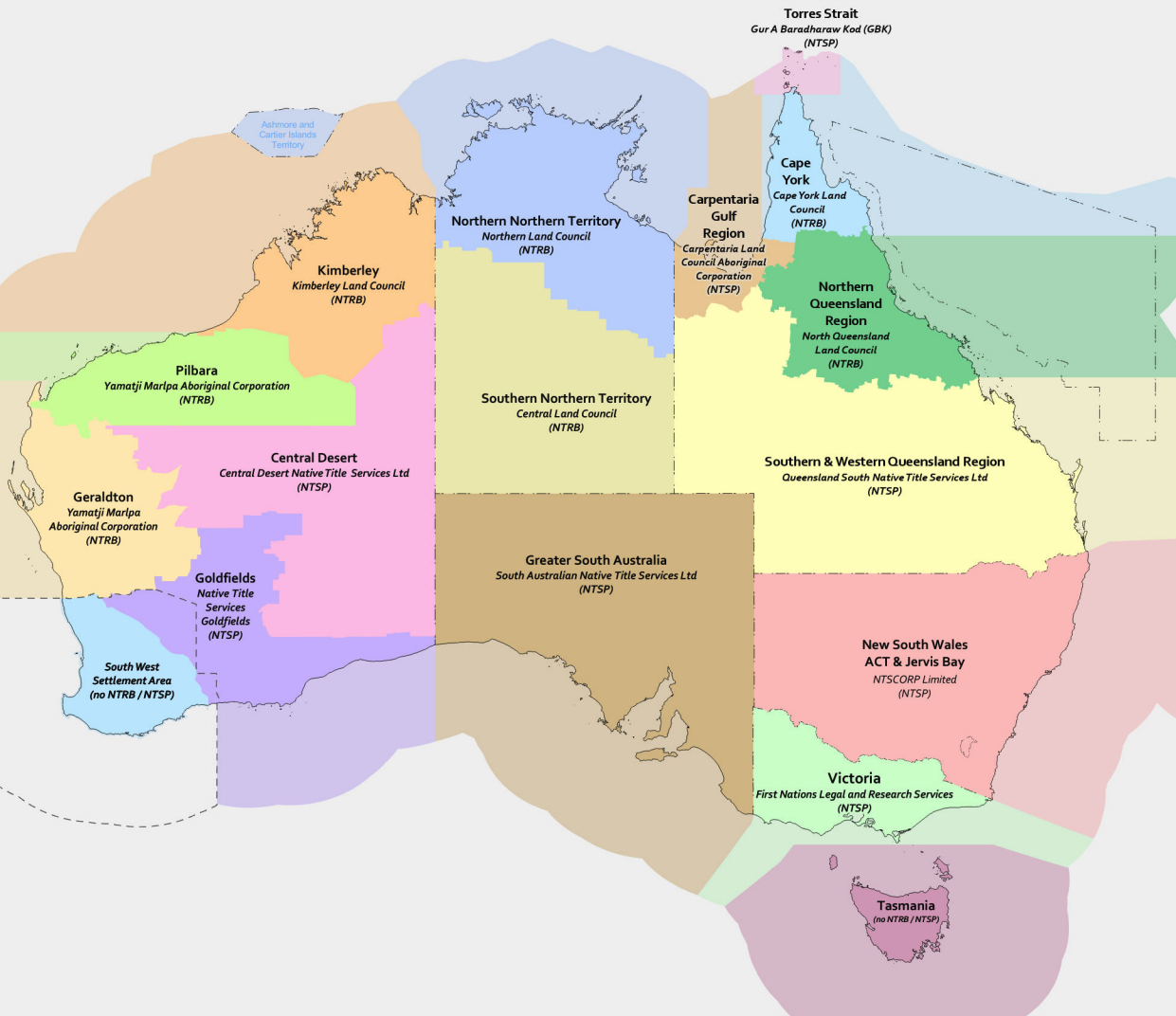
Native Title Representative Body or Service Providers
Native Title Representative Bodies and Native Title Service Providers have statutory functions under the Native Title Act 1993 (Cth) and can identify the native title claimants and holders in a particular area.
They can also assist in negotiating land and sea use agreements.
If there is no Prescribed Body Corporate (PBC) then you should commence engagement with the Native Title Representative Bodies-Service Providers.
Their role is to assist native title claimants and holders with:
- native title applications, negotiations and proceedings
- responding to non-claimant applications and future act negotiations
- compensation and test cases
- heritage and site clearing tasks
- servicing of Prescribed Bodies Corporates (PBCs), including assistance in relation to future acts and ILUAs (and other agreements in relation to native title).
Native Title Service Providers perform the same function under the Native Title Act 1993 (Cth) as Native Title Representative Bodies in areas where there is no Native Title Representative Body.
Native Title Representative Bodies-Service Providers are funded by the Australian government under the Native Title Act 1993.
Aboriginal Land Councils
Aboriginal Land Councils are typically established under the relevant state or territory land rights legislation.
In some jurisdictions, land rights legislation also establishes entities called 'land trusts', which hold title to areas of land.
The legislation that established the relevant Land Council will typically set out their purpose and functions. Accordingly, the purpose and functions of Land Councils will differ between jurisdictions.
The functions of Land Councils will likely include assisting First Nations groups to negotiate agreements with proponents and governments over the use of land and waters.
Traditional Owner Corporations and Registered Aboriginal Parties (Victoria)
Traditional Owner Corporations
In Victoria, groups may become formally recognised through a Recognition and Settlement Agreement under Victoria's Traditional Owner Settlement Act 2010. If this occurs, then their corporation is typically referred to as a "Traditional Owner Corporation" (TOC).
The same groups may also have achieved a native title determination under the Native Title Act 1993, meaning the TOC will also be a Prescribed Body Corporate (PBC). The same corporation is also likely to be a Registered Aboriginal Party (RAP) under Victoria's Aboriginal Heritage Act 2006, appointed by the Victorian Heritage Council.
Registered Aboriginal Parties
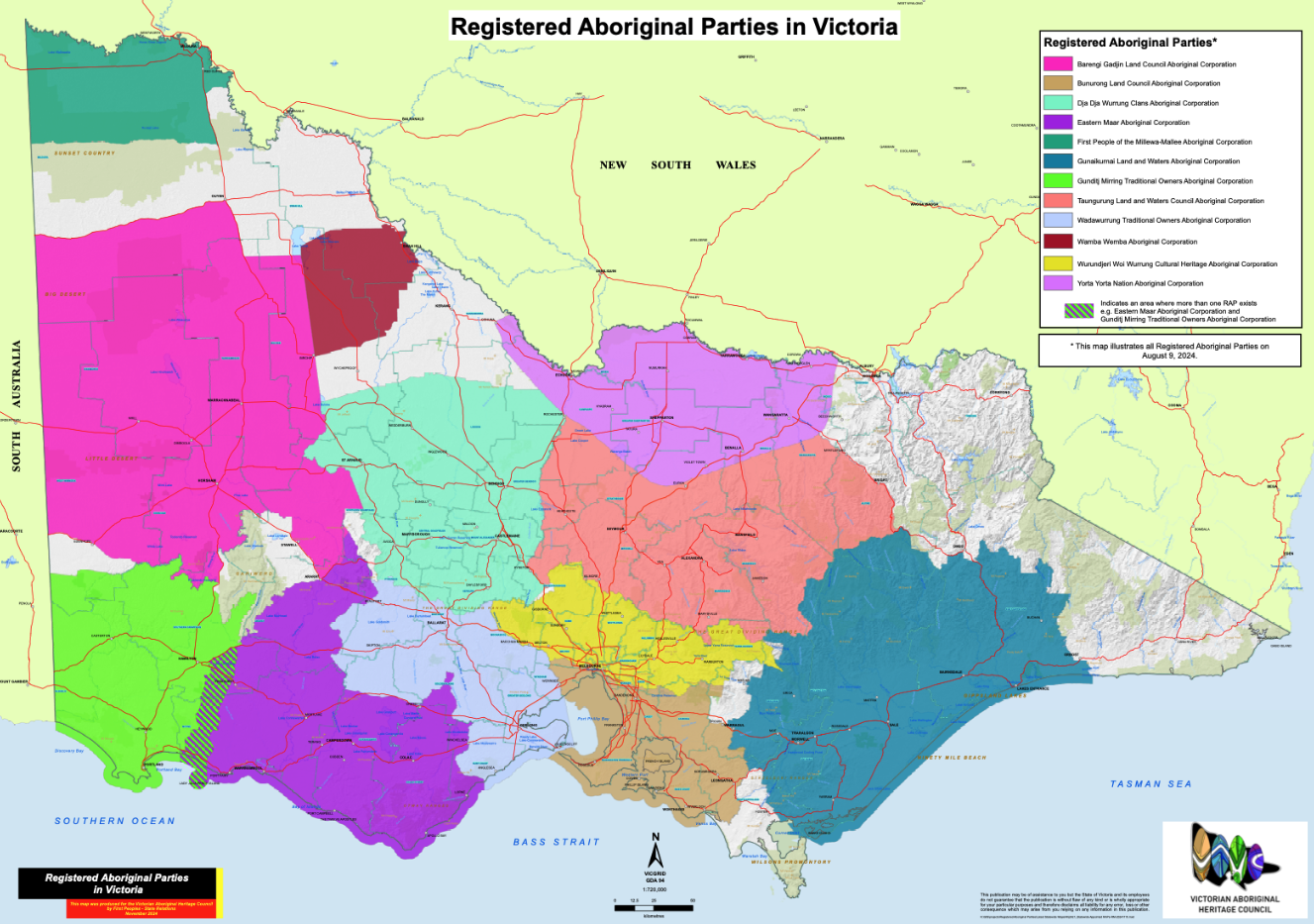
All formally recognised Traditional Owners in Victoria are represented by Registered Aboriginal Parties (RAPs), also known as Traditional Owner Corporations.
The Victorian Aboriginal Heritage Act 2006 recognises RAPs as the primary guardians, keepers and knowledge holders of Aboriginal cultural heritage.
Proponents must contact RAPs for advice on all matters relating to places or objects in a proposed project area, and to negotiate a Cultural Heritage Management Plan.
The core functions of RAPs includes:
- evaluating Cultural Heritage Management Plans
- assessing Cultural Heritage Permit applications
- making decisions about Cultural Heritage Agreements
- providing advice on applications for interim or ongoing Protection Declarations
- entering into Aboriginal Cultural Heritage Land Management Agreements with public land managers.
There are 12 RAPs (as of March 2025) covering approximately 77.5% of Victoria.
Noongar Regional Corporations (south west Western Australia)
Traditional Owner groups in south west Western Australia are represented by six Noongar Regional Corporations.
The Regional Corporations manage and care for the cultural land and waters within the region and have prescribed responsibilities under their Indigenous Land Use Agreements (ILUAs) to advance Noongar-led social, economic, cultural and environmental outcomes.
Proponents must engage with the Regional Corporations in accordance with these requirements.
These include formalised partnership arrangements in relation to:
- The Noongar Land Estate (through the Noongar Land Fund)
- The Conservation Estate
- Aboriginal Heritage
- Economic Participation
- Community Development.
The Regional Corporation Guide highlights the obligations and provides a summary of the relevant sections in the ILUAs, Noongar Boodja Trust Deed and the Noongar Corporation Rule Books.
The Regional Corporations were established as part of the South West Native Title Settlement – a landmark native title agreement negotiated between the Noongar people and the Western Australian Government.